
India’s PLI Schemes: Export Manufacturing’s Future by 2030
Intro: Why This Matters for India Now – February 2026
Let’s be honest, the future of India’s economy is a hot topic right now. And the government’s Production Linked Incentive (PLI) Schemes? They’re absolutely key to shaping that future. As of February 6th, 2026, the market’s telling us that India’s manufacturing sector is poised for a significant shift, largely thanks to these initiatives.
For Indian households, these policies could mean more exciting job opportunities, a noticeably better quality of life – and potentially even higher disposable incomes as industries really start to boom. For investors, PLI Schemes represent a huge, once-in-a-generation opportunity to diversify your portfolio and tap into a rapidly growing economy. And for professionals and MSMEs (Micro, Small, and Medium Enterprises), this is your chance to align with India's national goals and, frankly, compete on a global stage.
These aren't just about creating jobs or boosting GDP figures; they’re about fundamentally transforming India's economy – moving us away from relying on imports and towards becoming a powerhouse of export-driven manufacturing. This shift will impact everything from inflation rates and interest rates to how we consume goods and how development unfolds across the country. Understanding these impacts is crucial, no matter where you stand in the Indian economy.
Context: A Closer Look – Beyond the Headlines
Let’s face it, a lot of the initial reports on the PLI Schemes focused on surface-level trends. But a deeper dive reveals a much more nuanced picture. We need to look beyond just export volumes and really understand the return on investment for each sector.
Take textiles, for example. The initial reports showed impressive export growth, but they didn’t delve into the profitability of those textile companies – or how much of that growth was driven by increased production capacity rather than actual sales. Similarly, while the focus on solar panels is fantastic, we need a granular understanding of how much investment is truly going into research and development versus simply scaling up existing production lines.
That’s where things get interesting. We need to consider emerging trends like the rise of localized supply chains – companies building more of their value chains within India – and the impact of PLI on attracting foreign direct investment. These factors are just as crucial to a comprehensive financial assessment. Often, these perspectives are overlooked, but they offer critical insights for investment strategies in 2026.
The PLI Schemes were launched in 2021 as part of the government’s broader push to boost exports and domestic manufacturing. They offer incentives – think duty benefits and cash credits – to companies that hit specific export targets. The focus is on capital-intensive industries with high import substitution potential.
Here’s a breakdown of the key sectors:
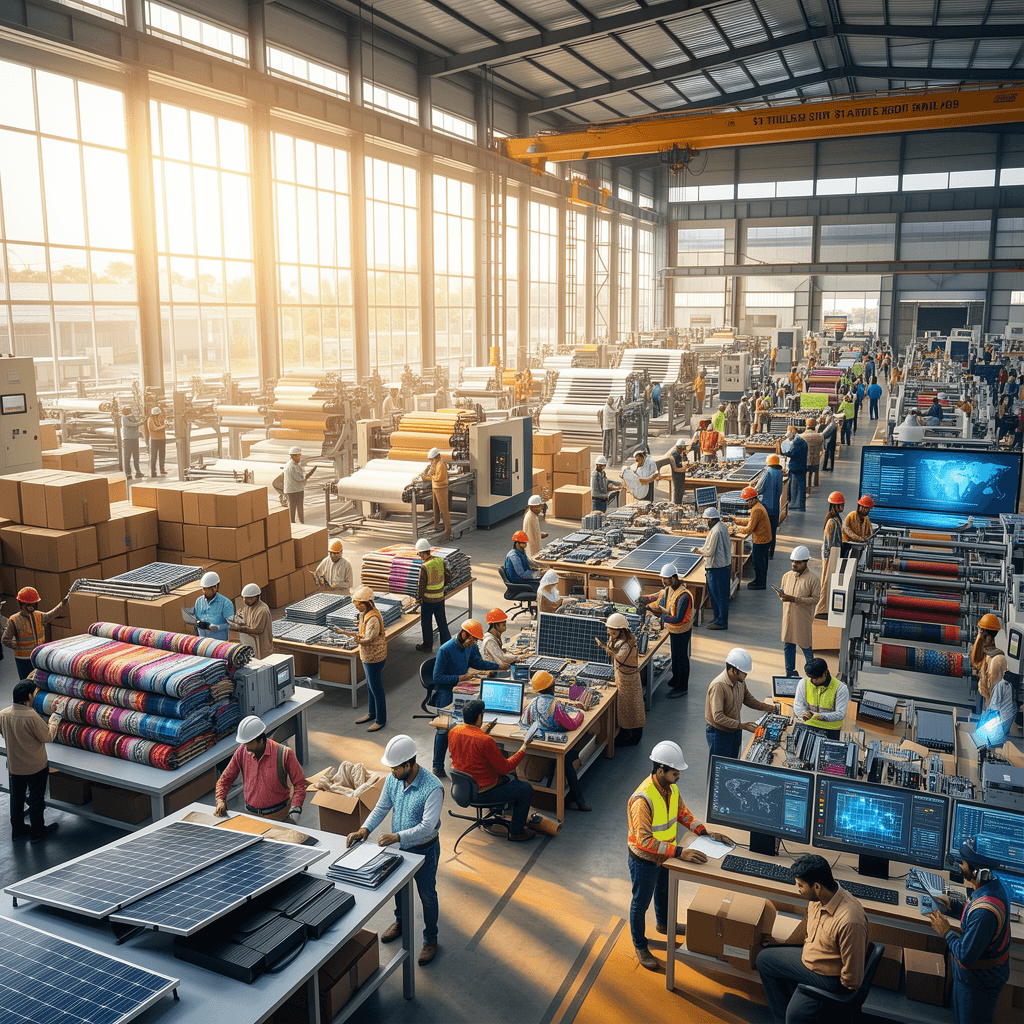
- Electronics and Semiconductor Manufacturing: The government’s aiming for $50 billion in investments by 2030, and we’re already seeing major players like TSMC and Intel setting up manufacturing units – a game-changer for India’s tech sector.
- Pharmaceuticals and Biotechnology: They’re aiming for a global market share of 5% by 2030, which, if achieved, would be incredible.
- Textiles: A target of $100 billion in exports by 2030 – ambitious, but with the right support, it’s achievable.
Initial data from 2023-24 is already showing impressive results. For example, the Indian textile industry has seen a 25% increase in exports, largely driven by PLI incentives. This influx of investment is expected to accelerate over the next five years, positioning India as a key player in global supply chains – something many experts were initially skeptical about.
The Big Picture: GDP and Economic Structure
The PLI Schemes are designed to stimulate domestic manufacturing and exports, which will directly contribute to India’s GDP growth. By focusing on high-value-added sectors, the government’s aiming to shift the economic structure towards more sustainable and less import-dependent industries.
According to a report by the Department for Promotion of Industry and Internal Trade (DPIIT), PLI Schemes could add 1-2% points to India’s annual GDP growth rate over the next five years. This is particularly significant, given the global economic slowdown and the need for self-reliance. Frankly, it's a bold move, and its success will be a key indicator for the entire Indian economy.
Short-term vs. Long-term: In the short term, we’ll see a lot of investment in infrastructure and capacity building. Companies will be setting up manufacturing units, leading to a rise in capital expenditure (Capex) – which will create temporary demand for raw materials and labor. However, over the long term, as these sectors mature, India is expected to benefit from scale economies and global supply chain diversification, reducing our reliance on imports and boosting export revenues.
Inflation, Interest Rates, and the RBI
Impact on Indian Inflation Trends: The PLI Schemes could have a mixed impact on inflation. On one hand, increased manufacturing activity could lead to higher demand for labor and raw materials, potentially causing wage pressures and supply chain bottlenecks. This could contribute to cost-push inflation in the short term. On the other hand, as domestic production scales up, India may become less dependent on imported goods, reducing import bill-related inflation. The RBI’s data shows that import-dependent inflation contributed significantly to headline inflation in 2023-24, so this shift could have a mitigating effect over time.
How RBI Policies Might Respond: The Reserve Bank of India (RBI) has maintained a cautious stance on monetary policy in recent years, balancing the need to control inflation with the imperative to support economic growth. The success of PLI Schemes will be crucial for determining the RBI’s future policies. If the schemes lead to sustained export growth and reduced import dependence, the RBI may have more flexibility to lower interest rates or adopt an accommodative monetary stance. However, if inflation remains sticky due to supply chain disruptions, the RBI might maintain a tighter grip on monetary policy.
Effect on Interest Rates and Borrowing Costs: The overall impact of PLI Schemes on interest rates will depend on how they influence inflation and economic growth. In the short term, higher demand for credit to fund manufacturing investments could lead to a slight increase in borrowing costs as banks pass on higher funding expenses. Over the long term, if the schemes deliver on their promises, stronger GDP growth and improved external balances may allow for a more accommodative monetary environment, potentially lowering interest rates.
Jobs and Consumption: The Human Impact
Employment Impact Across Sectors: The PLI Schemes are expected to create millions of jobs across various sectors. According to government estimates, the electronics sector alone could generate 3 lakh new jobs by 2030. But it's not just about electronics; ancillary industries supporting these manufacturing units will also see employment growth.
How Indian Households' Consumption Patterns Will Change: As industries expand, wage levels in key sectors are expected to rise. This could lead to increased disposable incomes for workers in manufacturing and export-oriented jobs. However, the extent of this impact will depend on whether productivity gains are passed on to workers or retained as corporate profits. We're already seeing some early signs of this – increased demand for consumer electronics, for example.
Regional Variations: The benefits of PLI Schemes are unlikely to be evenly distributed across India’s regions. States with established industrial bases and better infrastructure, such as Maharashtra and Tamil Nadu, are likely to gain the most. However, the government has emphasized creating opportunities in less developed states like Uttar Pradesh and Madhya Pradesh.
Markets, Banking, and Investment
Impact on Indian Stock Markets, Bonds, Currency: The PLI Schemes have already started attracting foreign investors to India’s manufacturing sector. This influx of capital could lead to sustained bullishness in stock markets, particularly in sectors benefiting from the schemes.
In terms of bonds, increased foreign investment may put upward pressure on bond yields as global investors seek higher returns in India. However, this could also make borrowing more expensive for domestic companies unless accompanied by a significant increase in liquidity in the bond market.
The rupee’s exchange rate is expected to stabilize as India becomes less dependent on imports and more competitive in exports. A stronger rupee would make imported capital goods cheaper, further benefiting manufacturing investments.
Banking Sector Implications: Indian banks are likely to see an increase in loan demand from companies setting up new manufacturing units or expanding existing operations. This could lead to a rise in credit growth, particularly in sectors like technology and pharmaceuticals.
However, banks will need to carefully assess the risks associated with lending to capital-intensive projects. The government has introduced risk mitigation measures, but there is still potential for defaults if global demand falters.
Investor Implications: For investors, the PLI Schemes represent both opportunities and challenges. On one hand, they offer exposure to high-growth sectors that are expected to play a significant role in India’s future economy. On the other hand, investors need to be cautious about overvaluation risks as markets may become speculative in the short term.
Short-Term vs. Long-Term: Looking Ahead
What Happens in the Next 1-2 Years: Over the next couple of years, we'll see more foreign companies setting up manufacturing units in India, a rising demand for skilled labor, and short-term pressure on input costs like raw materials and energy.
What Happens in the Next 3-5 Years: By 2030, the impact of PLI Schemes should start becoming more visible. Key milestones to watch include achieving export targets in targeted sectors, reducing import dependency for key goods, and creating a robust domestic manufacturing ecosystem that can compete globally.
Key Takeaways – What You Need to Know
- India’s PLI Schemes are a game-changer for export manufacturing, with the potential to boost GDP growth by 1-2% over the next five years.
- While there may be short-term challenges like inflation and rising input costs, the long-term benefits of reduced import dependency and global competitiveness are significant.
- The schemes will have uneven regional impacts, with Tier-1 cities and established industrial hubs benefiting more initially.
- Investors should focus on sectors aligned with PLI priorities but remain cautious about overvaluation risks.
- For households, job opportunities in manufacturing and ancillary industries are likely to rise, though regional disparities may persist.
What to Watch For: Implementation progress of PLI-related investments, changes in global trade dynamics, and the ability of domestic industries to meet export targets without compromising on quality or sustainability.
What NOT to Do: Avoid getting carried away by short-term market fluctuations. While the PLI Schemes are promising, they require sustained implementation and global cooperation to achieve their full potential. Similarly, do not assume that all regions will benefit equally; some areas may see limited impact despite national-level gains.
