
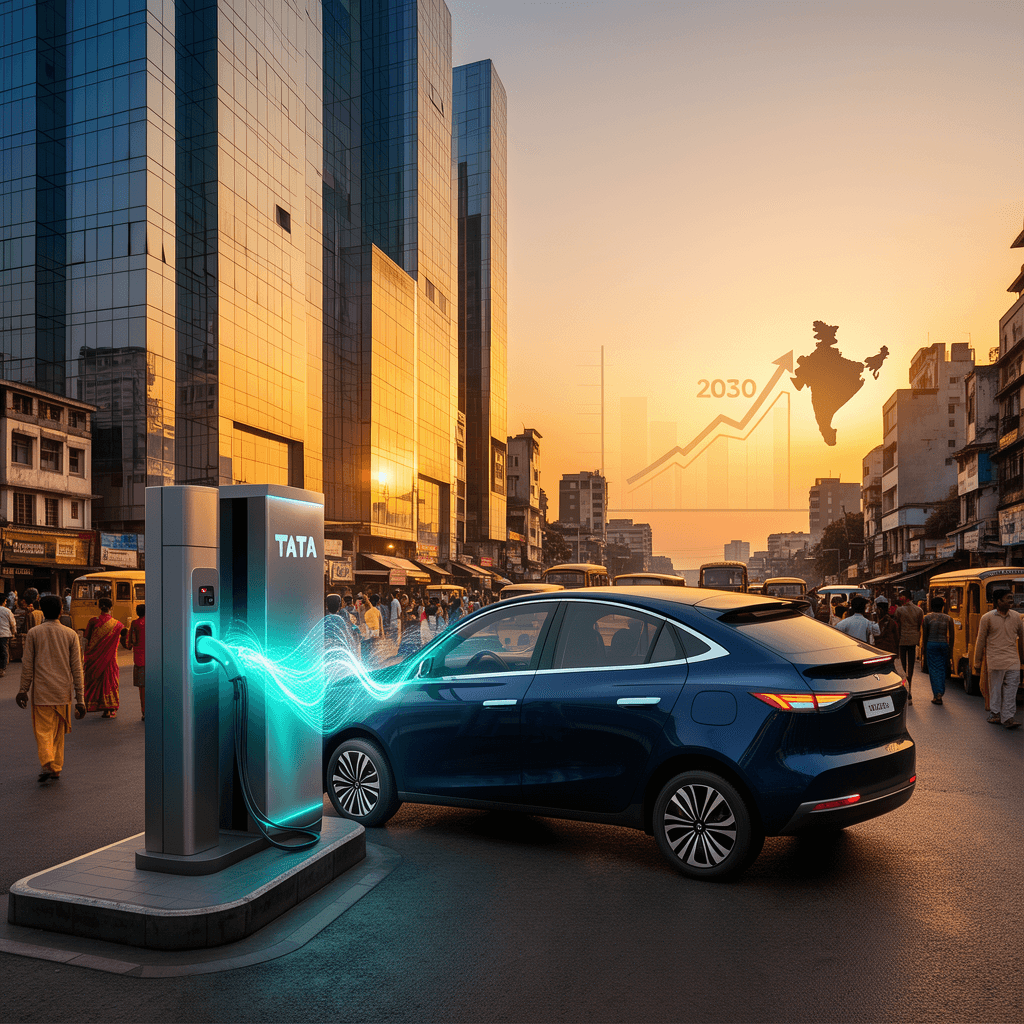
Electric Vehicle Charging: Tata’s Rise & India’s 2030 Shift – Let’s Talk About It
Introduction: Why This Matters for India Now (2026)
Okay, let’s be honest – the buzz around electric vehicles is real, and it’s only going to get louder. By 2026, India’s charging infrastructure is absolutely transforming, and Tata’s move into this space is a huge deal. We’re not just talking about a ‘nice-to-have’ future; this is a fundamental shift reshaping our economy, our jobs, and even how we think about transportation. For Indian households, investors, professionals, and even small businesses, understanding what’s happening with Tata and its charging network is no longer a luxury – it's the key to navigating the next decade with confidence. Think about it: you’re seeing a massive investment in innovation, and it’s going to impact you directly.
This piece breaks down how Tata’s strategy will ripple through India’s economy, impacting everything from inflation to the jobs market and, crucially, how we consume energy. By 2030, we’ll have a much clearer picture, and we’re aiming to give you the insights you need to understand what’s coming.
Context: The Rise of Electric Vehicle Charging Infrastructure – A Closer Look
Let’s face it – a lot of the reports out there are glossing over some key concerns. They’re focusing on the shiny surface of the EV boom, but we need to dig deeper. We're talking about a serious question of “stranded assets” – are Tata’s investments in charging stations going to become obsolete as technology rapidly advances?
Here’s the critical point: many analyses are ignoring the potential for Tata to need to write down a significant chunk of its investment if ultra-fast charging and battery swapping become the dominant technologies by 2030. This isn’t just about a slight dip; it’s about a potential capital loss that could shake investor confidence. And it’s not just Tata – we need to see a robust, adaptable financial model from all players, incorporating these advancements.
The drive for electric vehicles in India is fueled by several powerful forces: rising petrol prices are hitting wallets hard, air pollution in our major cities is a serious concern, and the global pressure to reduce carbon emissions is undeniable. The Indian government’s target of 30% EV penetration by 2030 – particularly focusing on public transport and two-wheelers – is a massive push. To support this, they've introduced tax breaks and subsidies, which is fantastic, but it’s Tata’s response that's truly shaping the landscape.
Key Facts (as of 2026):
- Tata is aiming for over 10,000 charging stations by 2030 – a truly ambitious goal!
- They're partnering with international firms like Solid Power to develop next-generation battery technology, and it’s showing real promise.
- India’s EV market is still growing, but the CAGR is holding steady at around 40% – a testament to the momentum.
India Impact Analysis – Let’s Get Real
Economy: How EV Charging Will Reshape India’s Economic Landscape
Okay, let’s be blunt: this isn’t just about cars; it's about rebuilding the entire automotive supply chain and creating a whole new set of industries. The investment in EV charging infrastructure is a catalyst – it’s driving growth in construction, manufacturing, and, surprisingly, even data analytics (managing those charging networks generates a lot of data!).
Short-Term vs. Long-Term:
- Short Term (2026-2028): We’re going to see a huge push to build out the initial charging network. This will create jobs in construction and manufacturing – think about the increased demand for skilled technicians and engineers. However, there will be some disruption in the traditional automotive sector as companies shift their focus.
- Long Term (2028-2030): This is where things get really interesting. As EVs become more common, India could significantly reduce its reliance on imported oil, stabilizing the economy and easing inflationary pressures. The growth of the EV industry will also generate revenue for the government through taxes and royalties – a win-win!
Inflation / Interest Rates: How EV Charging Affects Price Stability
The shift to electric vehicles is starting to nudge inflation downwards, particularly because we're relying more on renewable energy sources like solar and wind. The price volatility of petrol is a major driver of inflation, and that's starting to fade. However, the initial investment in charging infrastructure will add to production costs in the short term, so the RBI needs to be incredibly mindful of interest rates. They’re already exploring green loans and incentives to encourage investment in sustainable technologies – a smart move.
Jobs / Consumption: The Impact on Employment and Household Behavior
The rise of EV charging is creating entirely new job categories. While the fossil fuel industry might shrink, there’s a surge in demand for battery manufacturing, EV maintenance, and – critically – the installation and operation of charging stations. Cities like Mumbai and Bengaluru are leading the way, but we’re seeing growth across the board.
Household consumption is also changing. The upfront cost of an EV is still a hurdle, but lower running costs and government incentives are making them more attractive. Plus, the growing network of charging stations is making it easier than ever to switch. Rural areas, while lagging behind, are starting to see the potential – especially as battery technology improves and charging becomes more affordable.
Markets / Banking: The Role of Capital in the EV Revolution
The stock market is buzzing about this shift. Investors are betting big on companies involved in EV production and charging infrastructure. Tata’s involvement is a clear signal that this is no longer a niche market – it’s a fundamental economic transformation. Banks are scrambling to develop green loans and leases, recognizing the huge demand for financing.
Short-Term vs. Long-Term Implications
What Happens in the Next 1-2 Years? (2026-2028)
The focus is firmly on building the initial charging infrastructure. It's a race to establish a reliable network, and Tata’s aggressive expansion is key. Expect some initial costs, but early adopters will have a significant competitive advantage.
What Happens in the Next 3-5 Years? (2028-2030)
By 2030, India’s EV ecosystem will be much more mature. Charging stations will be commonplace in cities and towns. Sales of two-wheelers will surge, driven by affordability and government incentives.
Key Milestones to Watch
- Tata’s 10,000 charging stations – a critical benchmark.
- Standardized EV charging protocols across all states – essential for seamless charging.
- The rise of battery-swapping models – potentially a game-changer for cost.
What Indians Should Understand
Key Takeaways for Different Audiences
- Investors: The EV charging sector is the investment opportunity. Focus on companies with strong technology and strategic partnerships.
- Households: Don’t be intimidated by the upfront cost. The long-term savings are significant, and government incentives can make a real difference.
- Professionals: New jobs are emerging in every aspect of the EV ecosystem – seize the opportunity!
What to Watch For
- Government policy changes – keep an eye on regulations and incentives.
- Battery technology breakthroughs – cheaper, longer-lasting batteries are the key.
- Charging network expansion – especially in rural areas.
What NOT to Do
- Don't jump into unproven companies or technologies without thorough research.
- Don't overextend yourself financially – assess your needs and budget carefully.
Key Takeaways
- India’s transition to electric vehicles is reshaping our economy, inflation, jobs, and how we consume energy – it’s a massive shift.
- Tata’s strategy is a key driver of this transformation.
- While challenges remain, the long-term benefits for India’s future are significant.
Let’s keep the conversation going! This is a dynamic space, and we’ll continue to track these developments closely.
